Physical vs. chemical exfoliants: which type is right for your skin?
By Ulta Beauty Advisors · Published August 2026
All products featured are available at Ulta Beauty. Ulta Beauty Advisors select products independently. Prices and availability are subject to change.
Physical exfoliants manually buff dead skin cells off the surface using friction. Chemical exfoliants dissolve the bonds holding dead cells together using active acids or enzymes. Both clear away buildup and help skin look smoother and brighter, but they work differently, suit different skin types and pair better with different routines.
Getting clear on the difference helps you avoid over-exfoliating, protect your skin barrier and actually see results.
What is a physical exfoliant?
A physical exfoliant (also called a mechanical exfoliant) relies on physical force to remove dead skin cells, excess oil and surface debris. Think anything that requires rubbing: gritty scrubs, exfoliating cleansing brushes, silicone face scrubbers and textured cleansing pads all fall in this category.
Common physical exfoliant formats include:
Facial scrubs with finely-milled particles (sugar, jojoba beads, rice bran)
Exfoliating cleansing brushes and sonic face brushes that add gentle friction to your cleanse
Konjac sponges, which offer very mild physical exfoliation with a soft, plant-based texture
Exfoliating gloves or cloths that slough off dead skin in the shower
The upside: Physical exfoliation delivers immediate smoothness. Right after using a gentle scrub, skin typically feels softer because you've physically removed the outermost layer of buildup. There's no waiting for acids to work.
The watch-out: Coarse or sharp particles, and applying too much pressure, can cause micro-tears in the skin barrier. Over-exfoliating with a physical method can strip the skin barrier and trigger more oil production, breakouts or redness. Stick to gentle, finely-milled formulas and a light hand.
What is a chemical exfoliant?
A chemical exfoliant uses active acids or enzymes to dissolve the bonds between dead skin cells, so those cells can rinse or flake away on their own without any scrubbing. Chemical exfoliants can work at the skin's surface or penetrate more deeply, depending on the ingredient and its concentration.
AHAs (alpha hydroxy acids)
AHAs are water-soluble acids that work primarily on the skin's surface. They dissolve the bonds between dead cells, improving texture, tone and radiance. Common AHAs include:
Glycolic acid, the smallest molecule in the AHA family, which penetrates deeper than other AHAs and is widely used for dullness, uneven tone and fine lines
Lactic acid, gentler than glycolic, with humectant properties that help skin hold onto moisture
Mandelic acid, a larger-molecule AHA that acts more slowly and is better suited for sensitive or acne-prone skin
AHAs are a strong choice for dry, dull or aging-concerned skin. Because they're water-soluble, they work at the surface rather than inside pores.
BHAs (beta hydroxy acids)
BHAs are oil-soluble, which means they can penetrate into the pore lining rather than just working on the surface. Salicylic acid is the most well-known BHA and is widely used for acne-prone and congested skin. It loosens blackheads, helps clear clogged pores and has anti-inflammatory properties that can help calm active breakouts.
BHAs are a strong chemical exfoliant choice for oily, acne-prone or combination skin.
PHAs (polyhydroxy acids)
PHAs (like gluconolactone and lactobionic acid) are a newer generation of chemical exfoliants. Their larger molecular size means they penetrate more slowly and stay closer to the skin's surface, making them gentler than AHAs or BHAs. PHAs also have humectant properties that help skin retain moisture.
PHAs are a good fit for sensitive or reactive skin, or anyone whose skin doesn't tolerate traditional acids well. They deliver real exfoliation at a lower irritation risk.
Enzyme exfoliants
Enzyme exfoliants (typically derived from papaya or pineapple) work by breaking down the proteins in dead skin cells rather than dissolving acid bonds. They're gentle and a solid option for anyone new to exfoliation or with highly reactive skin.
Physical vs. chemical exfoliants: head-to-head
Physical exfoliant: Choose a physical exfoliant when you want immediate, tactile smoothness, you have normal or oily skin that isn't reactive and you're not already using actives like retinol or prescription acids.
Chemical exfoliant: Choose a chemical exfoliant when you want more uniform exfoliation, you're targeting specific concerns like hyperpigmentation, acne or texture and you want results that build over time.
Which is right for your skin type?
Dry or dehydrated skin
A gentle lactic acid toner or a PHA-based exfoliant used two to three times per week is a strong starting point. Lactic acid's humectant properties help hydrate while it exfoliates. Aggressive physical scrubs can strip already-low moisture levels, so use them sparingly if at all.
Oily or acne-prone skin
BHA (salicylic acid) is the most targeted choice. An AHA/BHA toner used a few times per week helps keep pores clear and can calm active breakouts. If you prefer physical exfoliation, choose a fine-particle scrub and limit it to once or twice per week, and skip it entirely on active, inflamed blemishes.
Sensitive or reactive skin
PHAs and enzyme exfoliants are the gentlest starting point. Use once per week and watch how your skin responds before increasing frequency. Physical scrubs with coarse particles are harder to control on reactive skin and are generally better avoided.
Combination skin
You can use different formulas in different zones. A BHA toner applied to the T-zone two to three times per week targets oilier, congested areas, while a lactic acid or PHA formula works gently on drier zones like the cheeks.
Skin with hyperpigmentation or dark spots
Glycolic acid may help with fading post-inflammatory hyperpigmentation and sun-related discoloration. A glycolic acid serum or toner used consistently, paired with daily SPF (non-negotiable when using any chemical exfoliant), can produce visible results over several weeks of consistent use. Vitamin C serums (look for L-ascorbic acid in the ingredients) are a strong addition to the same routine for brightening support.
How often should you exfoliate?
Most skin types do well exfoliating two to three times per week. Sensitive skin should start at once per week. Oily skin may tolerate up to four times with a gentle BHA formula.
Daily exfoliation is too much for almost every skin type. Signs you're overdoing it: redness, tightness, increased sensitivity or breakouts appearing where you don't normally get them. If that sounds familiar, pause exfoliation for a week, switch to barrier-repair products (ceramides, niacinamide, gentle moisturizers) and scale back when you reintroduce.
The best physical exfoliants at Ulta Beauty
Here are our top physical exfoliant picks available at Ulta Beauty, chosen for their formula quality, skin type fit and results.
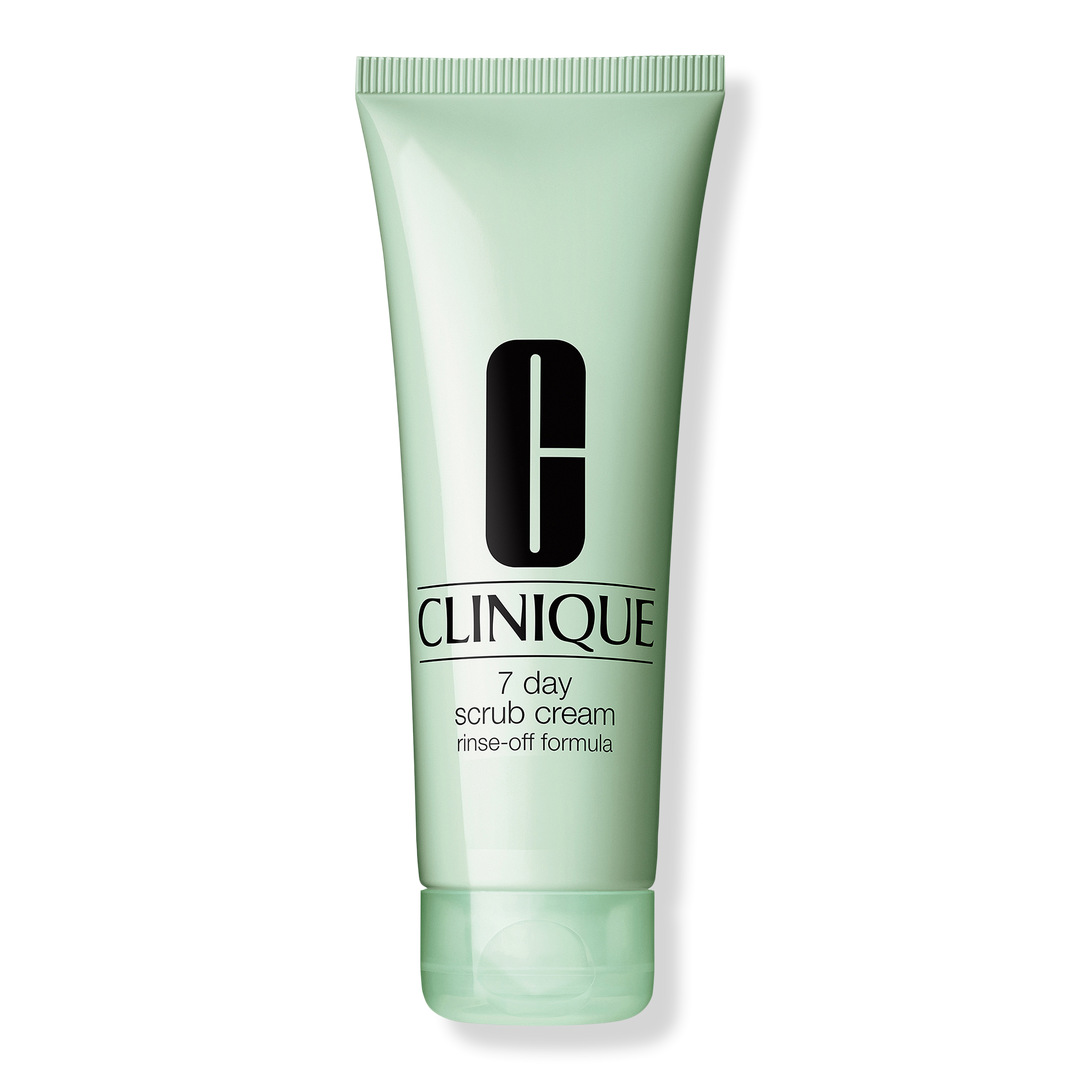
Clinique 7 Day Face Scrub Cream Rinse-Off Formula
Gentle silica-based physical scrub | All skin types | $29.00
Shop Clinique 7 Day Face Scrub Cream Rinse-Off Formula at Ulta →
This allergy-tested scrub is built around silica, a gentle physical exfoliant suspended in a water-based cream that polishes skin without the micro-tear risk that comes with coarser particles. The texture is creamy rather than gritty, which means it delivers real exfoliation without feeling abrasive.
It's formulated for all skin types: dry skin gets a smoothness boost without losing moisture, and oily or combination skin gets a fresh slate for moisturizer and makeup application.
The formula is free from parabens, SLS, SLES, sulfates, synthetic colors, denatured alcohol, fragrance and gluten. Massage over makeup-free skin, avoiding the eye area, then rinse or tissue off and follow with moisturizer.
Key specs: Silica (physical exfoliant · All Skin Types · Fragrance-free · Paraben-free
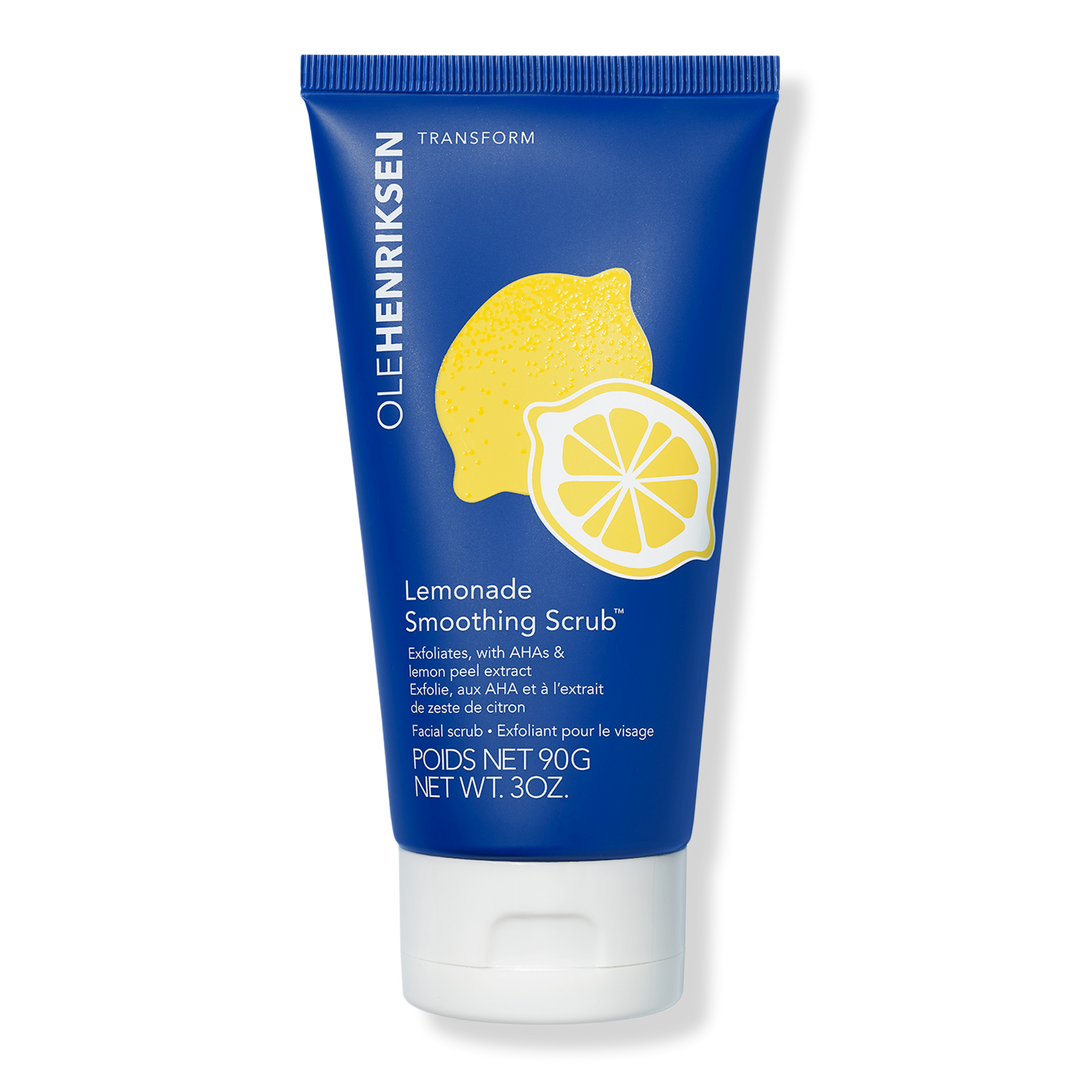
OLEHENRIKSEN Lemonade 10% AHA Smoothing Scrub
Dual-action physical and chemical scrub --- 10% AHAs, ultra-fine sugar | $36.00
Shop OLEHENRIKSEN Lemonade 10% AHA Smoothing Scrub at Ulta →
This scrub is dual-action: ultra-fine sugar particles and lemon peel extract provide the physical exfoliation, while a 10% AHA blend of glycolic and lactic acids simultaneously dissolves the bonds between dead skin cells. Glycolic acid targets dullness and uneven tone while lactic acid brings added moisture retention, so you're exfoliating and hydrating at the same time. Holy basil and chamomile extracts help soothe skin post-exfoliation.
Because this product contains 10% AHAs, it counts as an acid treatment in your routine. Use it two to three times per week on wet skin, leave on for up to two minutes, then rinse. If you're already using AHA serums or toners, adjust your routine accordingly to avoid stacking too much acid in one day. The formula is vegan, made with clean ingredients and comes in sustainable packaging.
Key specs: 10% AHAs (glycolic and lactic acids) · Ultra-fine Sugar Exfoliants · Lemon Peel Extract · Vegan
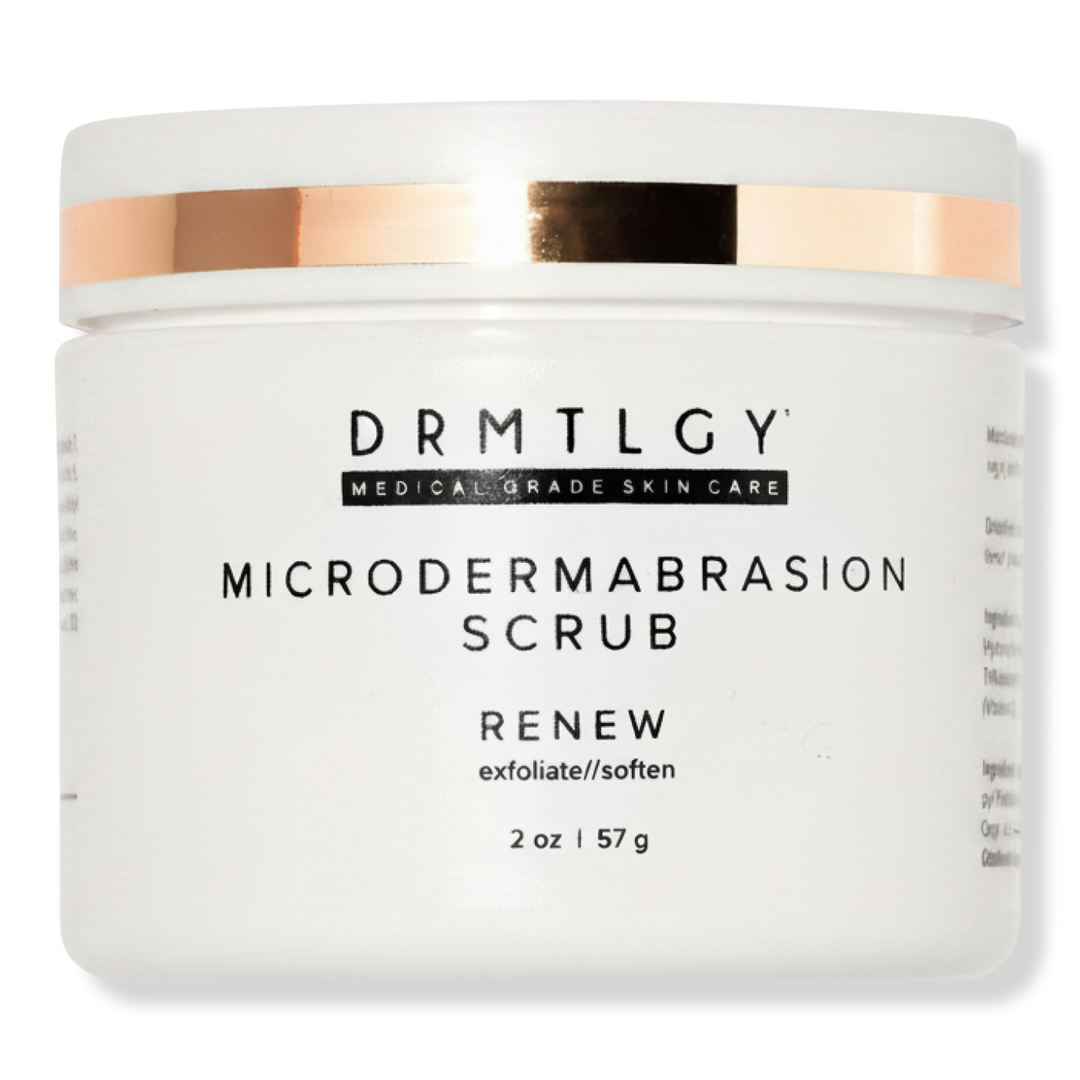
DRMTLGY Microdermabrasion Scrub Gentle Physical Exfoliant
Fine pumice microdermabrasion scrub with peptides and ceramides | $20.00
Shop DRMTLGY Microdermabrasion Scrub Gentle Physical Exfoliant at Ulta →
This scrub uses fine pumice granules to buff away dead skin cells while a Peptide Complex and Ceramides Complex work to support texture and protect the moisture barrier at the same time. That combination of exfoliation plus barrier support is uncommon in a physical scrub format, and it makes this a good choice for anyone who wants the smoothing results of a scrub without compromising skin health.
The formula targets the appearance of fine lines, acne scarring and hyperpigmentation with regular use and is gentle enough for once to twice weekly use. Sugarcane extract helps brighten between sessions. Cruelty-free, vegan and exclusive to Ulta Beauty.
Massage over clean skin across the face and neck, then rinse and pat dry.
Key specs: Fine Pumice Granules · Peptide Complex · Ceramides Complex · Vegan
The best chemical exfoliants at Ulta Beauty
From rinse-off weekly peels to gentle daily toners to overnight treatments, here are four chemical exfoliants available at Ulta Beauty that cover the full range of skin types and experience levels.
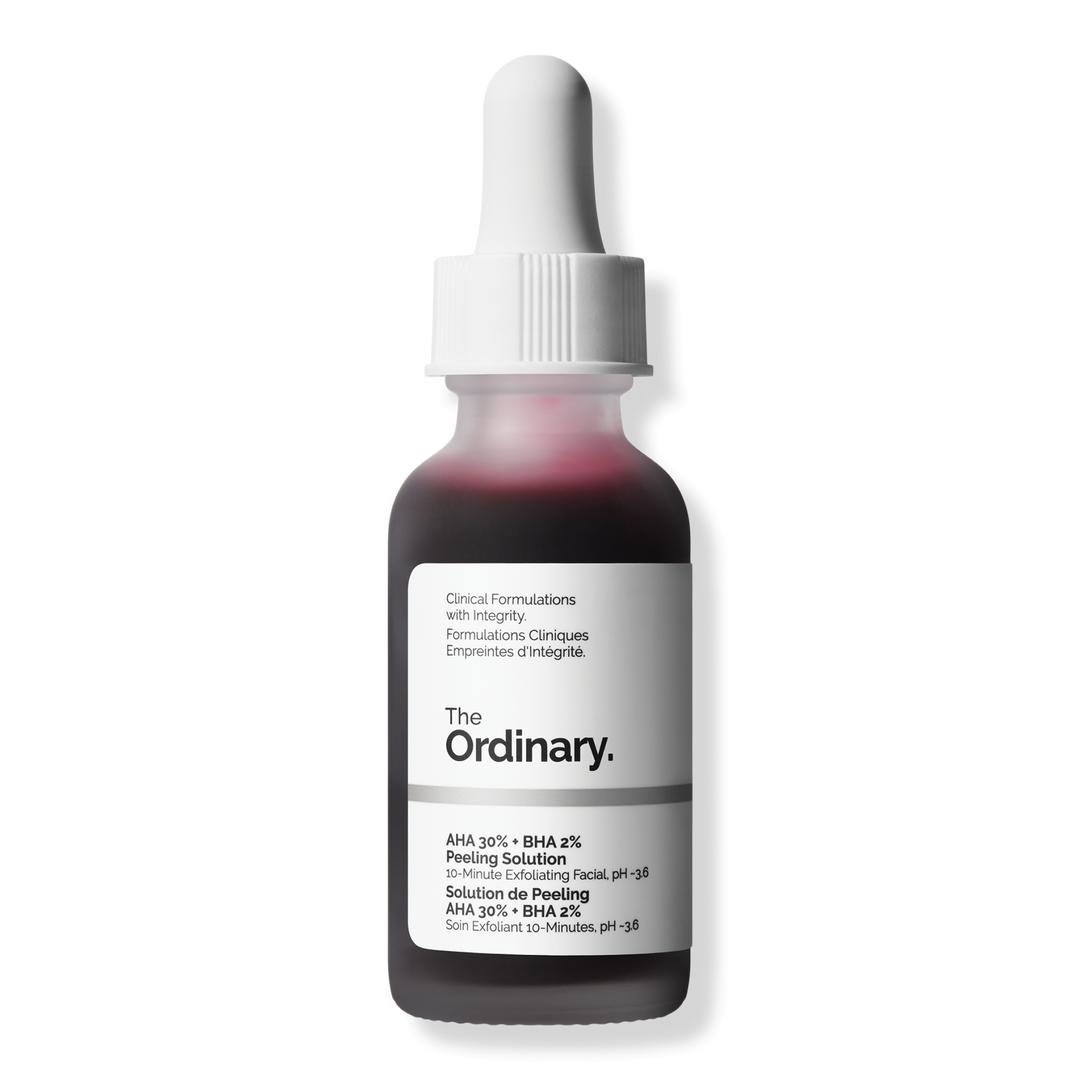
The Ordinary AHA 30% + BHA 2% High-Strength Peeling Solution for Brightening
High-strength weekly peel --- 30% AHA, 2% BHA | $9.50
Shop The Ordinary AHA 30% + BHA 2% High-Strength Peeling Solution at Ulta →
The Ordinary's Peeling Solution is one of the more affordable chemical exfoliants available at Ulta Beauty, but it is not a starter product. This formula contains 30% AHAs (glycolic, lactic and tartaric acids) and 2% BHA (salicylic acid), putting it among the higher combined acid concentrations available in a retail exfoliant. Tasmanian pepperberry is included to help counteract irritation potential, and hyaluronic acid and Vitamin B5 buffer the experience. This is still a treatment that requires careful use.
The formula targets textural irregularities, congested pores, uneven tone and visible signs of aging with results that build over consistent weekly use.
Usage rules: Use on dry skin only, not damp or wet. Apply with fingertips, leave on for no more than 10 minutes and rinse thoroughly with lukewarm water. Use no more than twice per week. Do not use in the same routine as other direct acids, retinoids, pure vitamin C or peptides. Perform a patch test before first use. If you have sensitive skin or are new to acids, start with a gentler formula first.
Key specs: 30% AHA (glycolic, lactic, tartaric acids) · 2% BHA (salicylic acid) · Hyaluronic Acid · Vitamin B5 · Tasmanian Pepperberry · Vegan
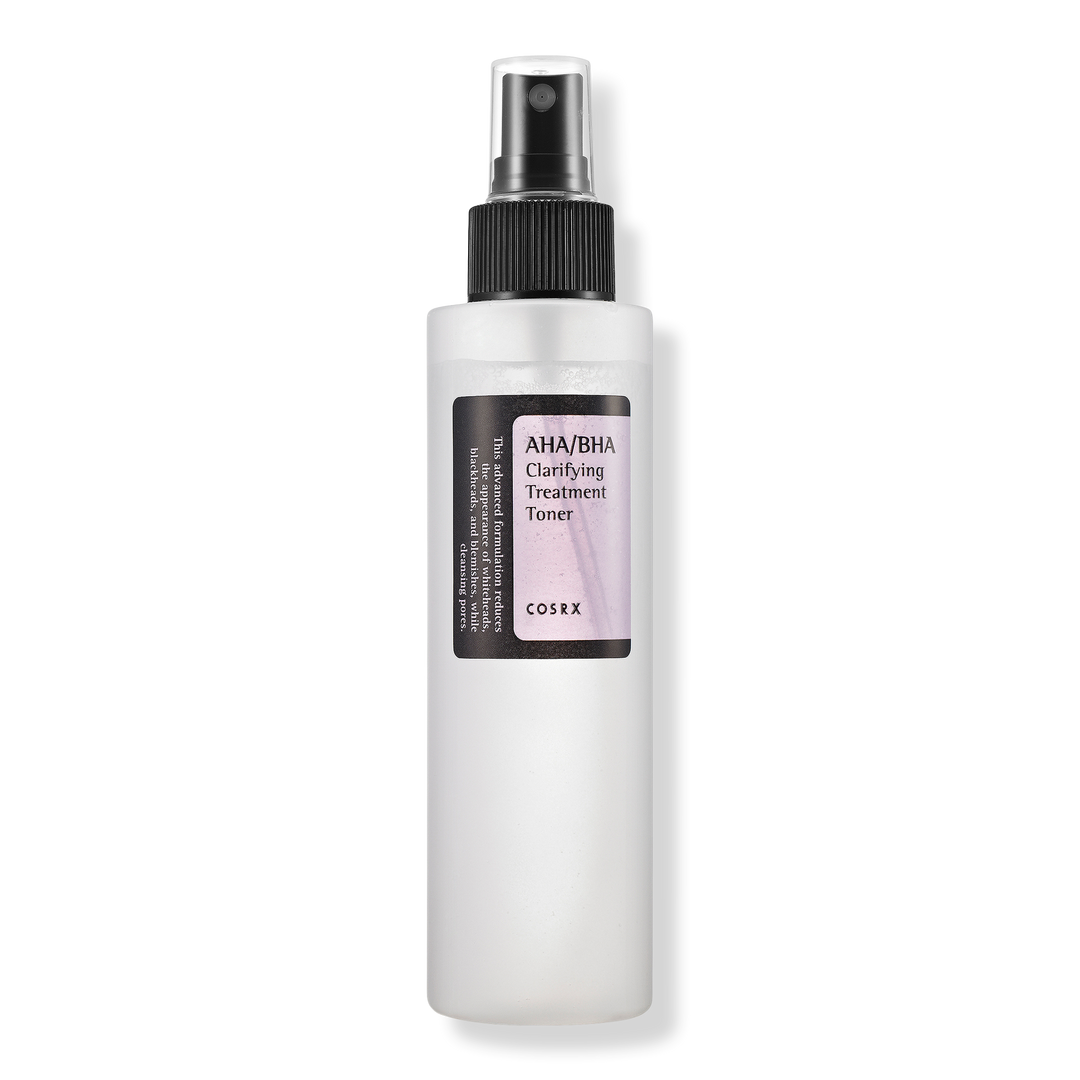
COSRX AHA/BHA Clarifying Treatment Toner
Daily-use K-beauty Exfoliating Toner | $20.00
Shop COSRX AHA/BHA Clarifying Treatment Toner at Ulta →
COSRX's approach here leans on botanical sources rather than high concentrations of synthetic acids. Willow bark water (a natural BHA source) makes up 10% of the formula, and apple water (a plant-derived AHA source that also helps calm irritation) accounts for another 10%. Glycolic acid and betaine salicylate round out the exfoliating lineup, helping keep pores clear and balance oil production.
The formula has only 10 total ingredients and is gentle enough for consistent daily use without the need for on-and-off cycling. Regular use can help improve texture and reduce breakouts and the marks they leave behind. Paraben-free, sulfate-free, phthalate-free and alcohol-free.
To use, spray onto a cotton pad after cleansing and wipe gently across the face, avoiding eyes and mouth. Follow with SPF if using in the daytime, as exfoliating acids increase UV sensitivity.
Key specs: 10% Willow Bark Water (natural BHA) · 10% Apple Water (natural AHA) · Glycolic Acid,
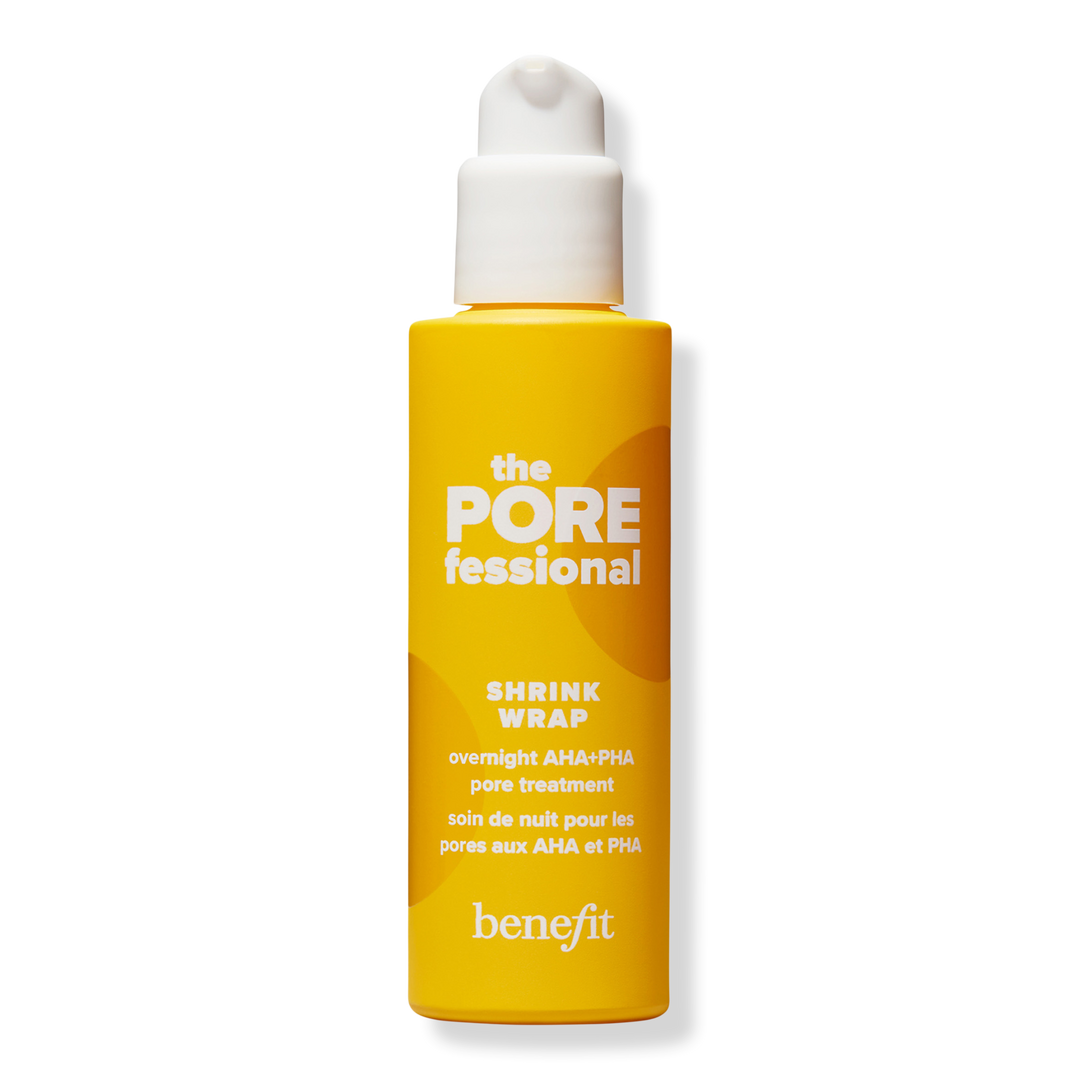
Benefit Cosmetics The POREfessional Shrink Wrap Overnight AHA+PHA Pore Treatment
Overnight AHA, PHA and BHA Pore Treatment | $46.00
Shop Benefit Cosmetics The POREfessional Shrink Wrap Overnight AHA+PHA Pore Treatment at Ulta →
The POREfessional Shrink Wrap combines AHAs (lactic and glycolic acids), PHA (gluconolactone) and BHA in a single overnight treatment, with niacinamide added to help visibly refine pores. The jelly-glaze texture applies without stickiness: spread it on, let it set for 30 minutes and rinse in the morning.
The PHA (gluconolactone) inclusion makes this formula accessible to a wider range of skin types. It's a larger-molecule acid that exfoliates gradually, stays closer to the skin's surface and has humectant properties that help skin retain moisture while the other acids work. That balance makes this suitable for both oily skin types looking for texture and pore results and drier or more reactive skin that can't tolerate straight AHA formulas.
Start once per week if you're new to acids, then work up to three to four times weekly as your skin adjusts.
Key specs: 10% Resurfacing Acid Blend (AHA: lactic and glycolic; PHA: gluconolactone; BHA) · Niacinamide · Overnight Leave-On Treatment
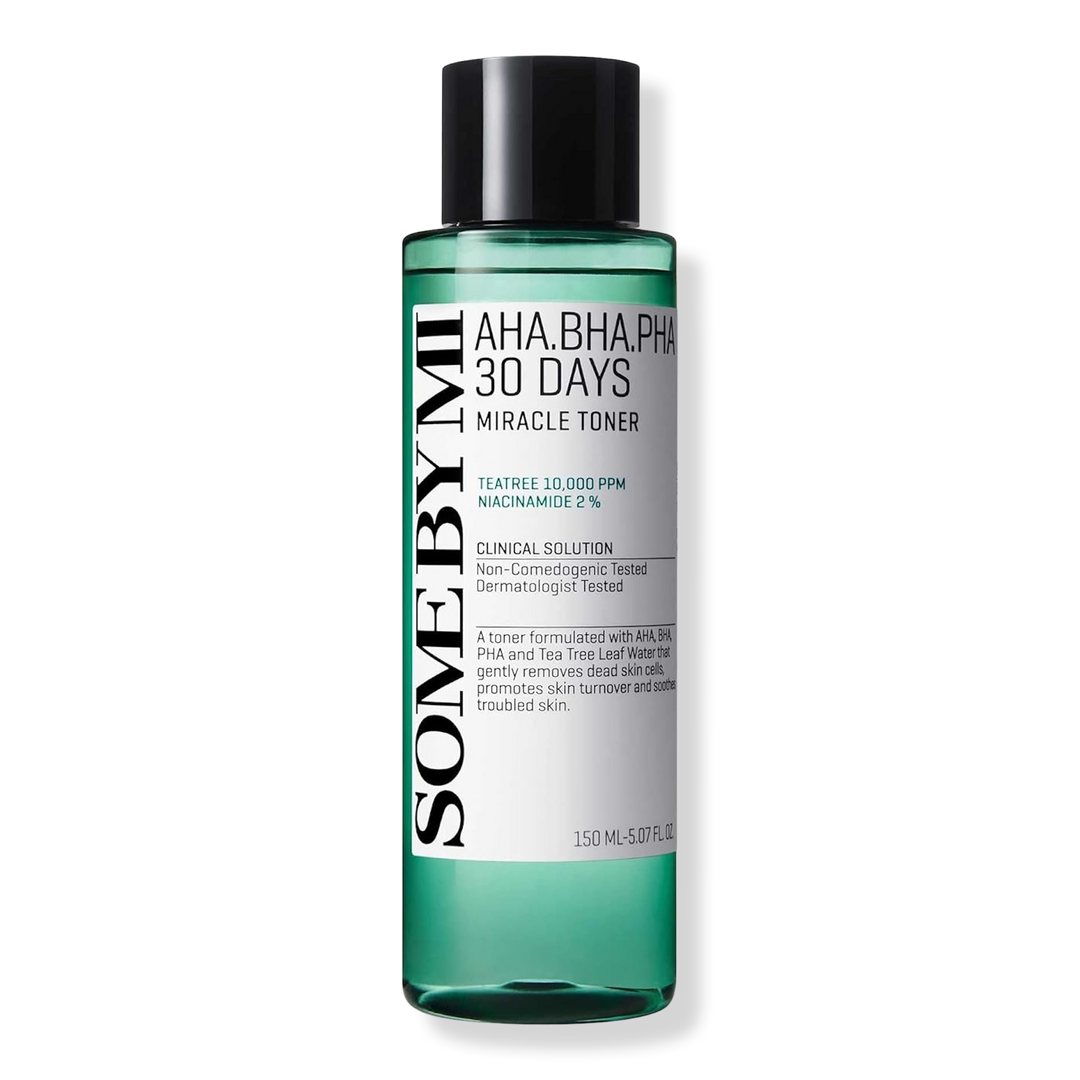
SOME BY MI AHA BHA PHA 30 Day Miracle Exfoliating Toner
Triple-acid K-beauty toner --- salicylic acid, citric acid, lactobionic acid, niacinamide, tea tree | $24.00
Shop SOME BY MI AHA BHA PHA 30 Day Miracle Exfoliating Toner at Ulta →
SOME BY MI's 30 Day Miracle Toner works across all three acid families in a single daily-use toner. Salicylic acid (BHA) penetrates pores to address congestion and acne-prone skin. Citric acid (AHA) brightens at the surface and helps reduce visible dullness. Lactobionic acid (PHA) strengthens the skin barrier and hydrates while it exfoliates, which makes this formula gentler than the three-acid lineup might suggest.
Niacinamide helps balance sebum production and even skin tone, while tea tree extract provides antibacterial support for breakout-prone skin. Papaya enzyme adds mild enzymatic exfoliation alongside the acid trio. The formula is alcohol-free, free from artificial fragrances and sulfate-free.
Apply after cleansing by soaking a cotton pad and wiping gently across the face. Follow with SPF during the day.
Key specs: Salicylic Acid (BHA) · Citric Acid (AHA) · Lactobionic Acid (PHA) · Niacinamide · Tea Tree Extract · K-Beauty
Frequently asked questions
How long does it take for a new skincare product to actually work?
Most active skincare products (including exfoliants, serums and spot treatments) need consistent use over several weeks before you can accurately judge whether they're working. For concerns like hyperpigmentation or texture, a realistic timeline is eight to twelve weeks of regular use before meaningful visible change. Physical exfoliants and hydrating products are the exception and often show immediate effects.
How do you know if your skin barrier is damaged, and how do you fix it?
The skin barrier is the outermost protective layer of your skin. When it's damaged, common signs include sudden sensitivity to products that used to be fine, tightness or stinging after cleansing, increased redness, persistent dryness even after moisturizing and more frequent breakouts. Over-exfoliation is one of the most common causes. To repair it, pause all actives (acids, retinol, vitamin C) and switch to a simplified routine: a gentle non-stripping cleanser, a ceramide-rich moisturizer and daily SPF. Ingredients like ceramides, niacinamide, panthenol and squalane support barrier recovery.
How do I read a skincare ingredient label to understand what's actually in the formula?
Skincare ingredient lists (INCI lists) are required by law in the US to be ordered from highest to lowest concentration. The first several ingredients typically make up the bulk of the formula. Active ingredients like AHAs, BHAs or salicylic acid may appear lower on the list but can still be present at effective concentrations. Watch for barrier-support ingredients (ceramides, glycerin, hyaluronic acid) in the top half of the list and note any known irritants or allergens (fragrance, certain essential oils) that may be worth avoiding if your skin is reactive.
Information provided is for educational purposes only and is not intended as medical advice or a guarantee of results. Consult a dermatologist or healthcare professional for personalized skin care guidance.
Related Content:
Best Pimple Patches, Summer Skin Care Sets, Skin Care Routine for Beginners, LED Face Mask Benefits, Best Ceramides For Skin, Slugging in Skin Care, What do Peptides do for Skin?
Discover more: Skin Care Buying Guides and Beauty Education Articles