How to apply hyaluronic acid serum correctly: step-by-step guide for maximum hydration
By Ulta Beauty Advisors · Published August 2026
All products featured are available at Ulta Beauty. Ulta Beauty Advisors select products independently. Prices and availability are subject to change*.
To apply hyaluronic acid serum correctly, smooth two to three drops onto damp skin within 60 seconds of cleansing, then immediately seal with a moisturizer. Skipping either of those two steps (the damp skin or the moisturizer seal) is the most common reason hyaluronic acid underperforms or leaves skin feeling dry instead of hydrated.
That's the short answer. Below you'll find everything else: what hyaluronic acid actually is, why molecular weight matters, a precise six-step application guide, pro tips, common mistakes and a complete FAQ.
What is hyaluronic acid, and why does your skin need it?
Hyaluronic acid (HA) is a naturally occurring humectant, a substance that attracts and holds onto water molecules, found throughout the body's connective tissues, joints and skin. Healthy skin contains significant amounts of HA, but production slows with age, sun exposure and environmental stress.
As a topical skincare ingredient, HA is known for its ability to hold moisture at the skin's surface. Skin that's properly hydrated tends to look plumper and more even in texture overall.
Hyaluronic acid doesn't add oil to the skin. It adds water. That distinction matters for understanding which skin types benefit and how to layer it without disrupting the rest of your routine.
Does molecular weight affect how hyaluronic acid works?
Yes, and the difference is meaningful enough to look for on a label. Hyaluronic acid molecules are not all the same size, and size determines how each type interacts with the skin.
Low vs. high molecular weight hyaluronic acid: what's the difference?
Low molecular weight HA
Size: 20--300 kilodaltons
Penetration depth: Reaches deeper epidermal layers
Primary benefit: Deeper-layer hydration
Feel on skin: Lighter and absorbs quickly
Irritation risk: Higher; some research notes a pro-inflammatory effect
Best for: Most skin types; use with caution on very sensitive skin
When to choose it: You want deeper hydration and your skin tolerates actives well
High molecular weight HA
Size: 1,000--1,400 kilodaltons
Penetration depth: Works at the stratum corneum (outermost layer)
Primary benefit: Immediate surface hydration, smoothing and barrier support
Feel on skin: Can feel slightly more cushioned or film-forming
Irritation risk: Lower; generally associated with anti-inflammatory properties
Best for: Sensitive, reactive or barrier-compromised skin
When to choose it: You have sensitive or reactive skin, or you're stacking multiple HA products
The best of both worlds: Many serums, including options available at Ulta Beauty across a range of price points, use a multi-molecular or dual-weight HA blend that combines both molecular sizes in one formula. Low molecular weight HA works into the deeper epidermal layers while high molecular weight HA smooths and seals the surface.
Choose low molecular weight HA when deeper hydration is the goal and your skin doesn't trend toward sensitivity.
Choose high molecular weight HA when your skin is sensitive, reactive, or you're already using multiple products that contain HA in a single routine.
How do you apply hyaluronic acid serum correctly? Step-by-step guide
Follow these six steps for consistent results from every application.
Step 1: Cleanse thoroughly.
Start with a clean face. Use your regular cleanser (gel, cream, foam or balm) to remove SPF, makeup and daily buildup. Cleansing also leaves the skin surface with a layer of residual moisture that hyaluronic acid needs to work effectively.
Step 2: Pat, don't dry.
After rinsing, gently press a clean towel against your face rather than rubbing until skin is completely dry. You want skin that's slightly damp: no drips, but a faint, visible moisture residue. This is the surface condition HA needs to attract water toward the skin rather than drawing it away from deeper layers.
Step 3: Apply within 60 seconds.
Apply your hyaluronic acid serum within 30--60 seconds of cleansing. That window matters because surface moisture begins to evaporate quickly, especially in heated or air-conditioned rooms.
Step 4: Use two to three drops.
Dispense two to three drops into your palm or directly onto fingertips. That's enough product to cover the full face and neck. Using more can leave a tacky residue that may interfere with the products applied on top.
Step 5: Press, don't rub.
Apply the serum using light pressing or patting motions across the forehead, cheeks, chin, nose and neck. Work outward from the center of the face and allow the product to absorb before moving to the next step.
Step 6: Seal immediately with moisturizer.
Hyaluronic acid attracts water but needs an occlusive layer on top to keep it at the skin's surface. Within 60--90 seconds of applying your serum, apply a moisturizer over the HA layer. Without this step, surface water can evaporate, particularly in dry or cold environments.
Tips for getting the most out of your hyaluronic acid serum
In dry or cold climates, mist first: Heated indoor air and cold outdoor temperatures both accelerate moisture loss from the skin's surface. If your skin dries out between cleansing and your application window, lightly mist your face with a hydrating facial mist or splash with water immediately before applying the serum to recreate a damp surface.
Layer thinnest to thickest: Hyaluronic acid serums are lightweight and water-based, so apply them first (right after cleansing) before heavier serums, treatments or creams. A vitamin C serum, niacinamide, retinol or exfoliant goes on after your HA layer, not before.
Use it morning and evening: Hyaluronic acid has no build-up period and is generally well-tolerated for twice-daily use across skin types, including sensitive and acne-prone skin. Morning use creates a hydrated base for makeup and SPF; evening use supports your routine's overnight steps.
Pair it with retinol: If retinol dryness or sensitivity is an issue, apply hyaluronic acid first to damp skin before your retinol step. A hydrated surface may help reduce the potential for dryness and flaking associated with retinol use.
Consider switching moisturizers seasonally: In summer humidity, a lightweight gel moisturizer seals HA effectively. In winter, when heating systems lower indoor air moisture, a richer cream moisturizer provides a stronger seal.
Which skin types benefit most from hyaluronic acid serum?
Hyaluronic acid is suitable for every skin type, but how each type uses it shifts slightly.
Dry skin: HA addresses surface dehydration that can make skin look dull and feel uncomfortable. Use it twice daily with a rich moisturizer. A high molecular weight formula or a dual-weight blend is often a good fit for dry skin.
Oily skin: Oily skin can still be dehydrated at the surface. Adding water (not oil) with a hyaluronic acid serum supports surface hydration without adding heaviness. A lightweight gel moisturizer works well as the sealing step.
Combination skin: HA can be applied evenly across the face. Adjust the moisturizer zone by zone if needed to balance drier and oilier areas.
Sensitive or reactive skin: Hyaluronic acid is non-irritating, non-acidic and pH-neutral. High molecular weight HA is generally the better choice for reactive skin. Patch test new formulas as you would any new product.
Acne-prone skin: HA is non-comedogenic and adds no oil to the skin surface. Stick to lightweight, oil-free formulas and follow with a non-comedogenic moisturizer.
Mature skin: HA supports surface hydration and can help make dehydration lines less noticeable with consistent use. Pairing it with a moisturizer that contains ceramides or peptides is a common approach for mature skin.
Our top hyaluronic acid serums at Ulta Beauty
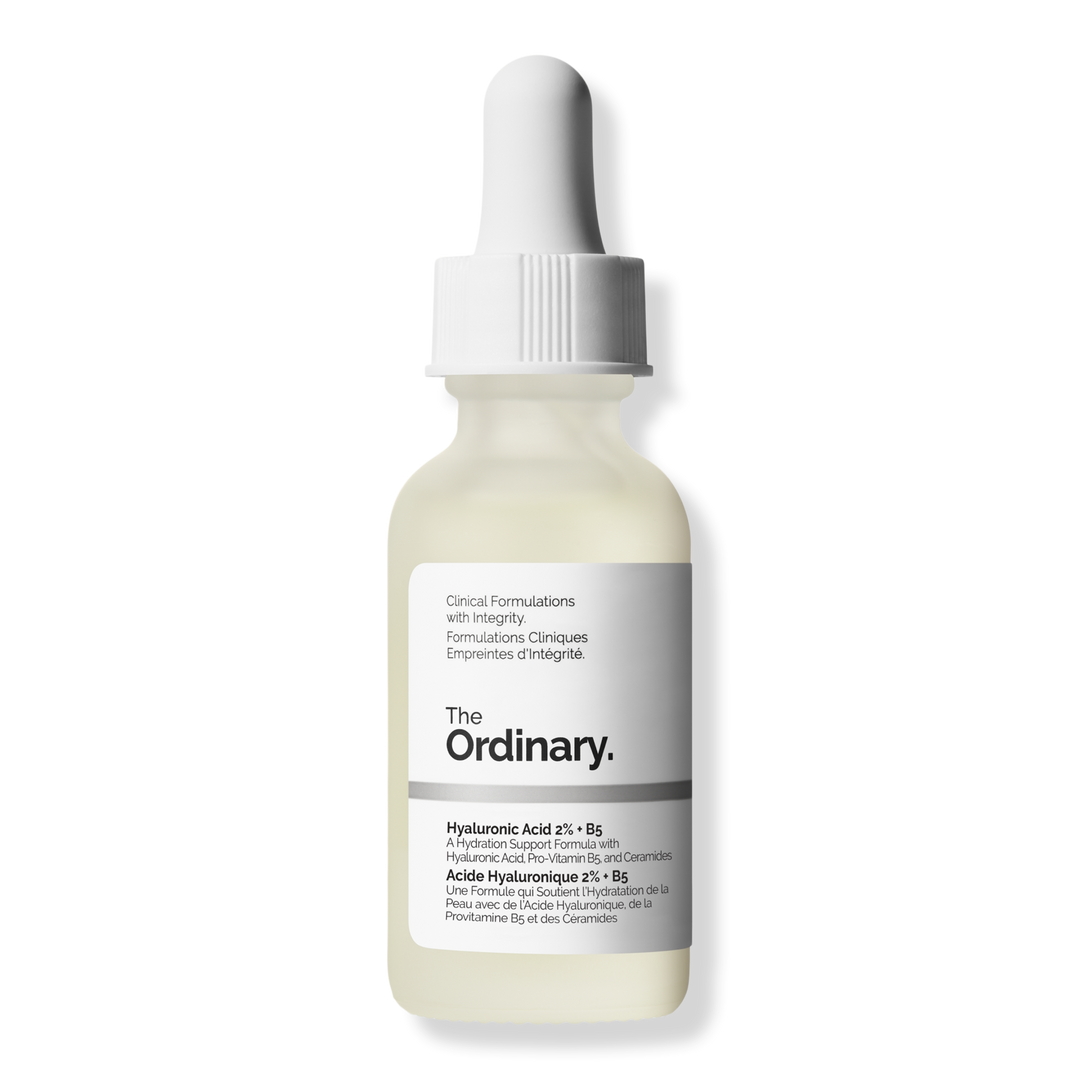
1 of 4: Best Affordable Hyaluronic Acid Serum
The Ordinary Hyaluronic Acid 2% + B5 Hydrating Serum with Ceramides
Hyaluronic Acid Serum | $9.90
Shop The Ordinary Hyaluronic Acid 2% + B5 at Ulta →
The Ordinary's formula combines 2% hyaluronic acid across multiple molecular weights (low, medium, and high) alongside Vitamin B5 and ceramides for barrier support. The multi-molecular approach targets both the surface and the deeper epidermal layers.
It contains no fragrance, no unnecessary actives, and no added complexity. Apply it to damp skin post-cleanse, follow immediately with a moisturizer, and the formula delivers what The Ordinary is known for: simple, ingredient-focused hydration at an accessible price.
Key specs: 2% Multi-Molecular HA · Vitamin B5 · Ceramides · Fragrance-Free · Vegan
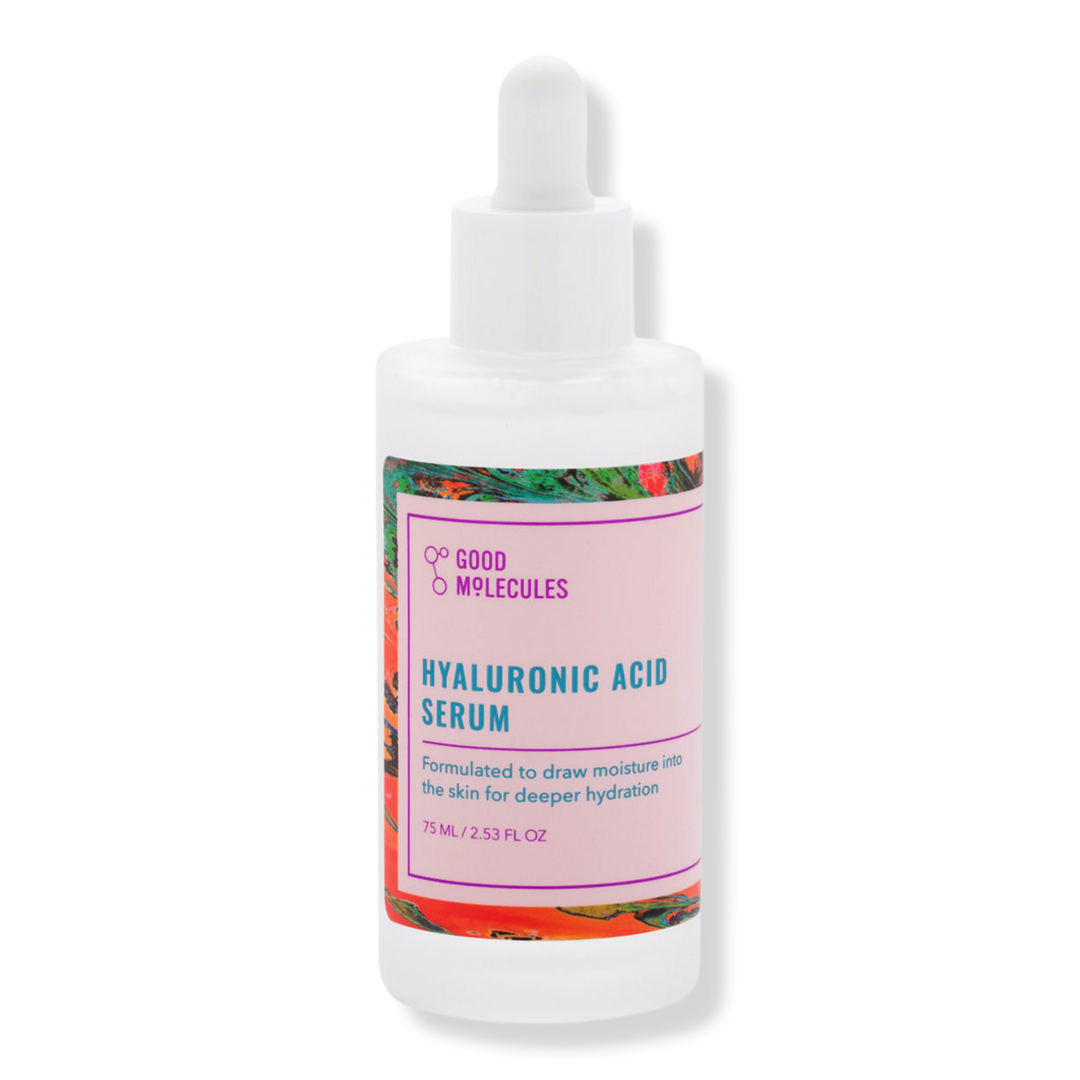
2 of 4: Best Hyaluronic Acid Serum for Layering
Good Molecules Hyaluronic Acid Serum
Lightweight Hyaluronic Acid Serum | $12.00
Shop Good Molecules Hyaluronic Acid Serum at Ulta →
Good Molecules designed this serum to function as a base layer in a multi-step routine. The formula is intentionally lightweight and fast-absorbing, making it a practical first serum step if your routine includes active ingredients like vitamin C, niacinamide, or retinol. It draws moisture to the skin's surface without heaviness, leaving a texture that layers well under subsequent products.
Key specs: Lightweight Formula · Fast-Absorbing · Fragrance-Free · Compatible with Actives
Layering Tip: Apply Good Molecules HA first to damp skin, wait 30 seconds for it to absorb, then layer your vitamin C or niacinamide serum on top.
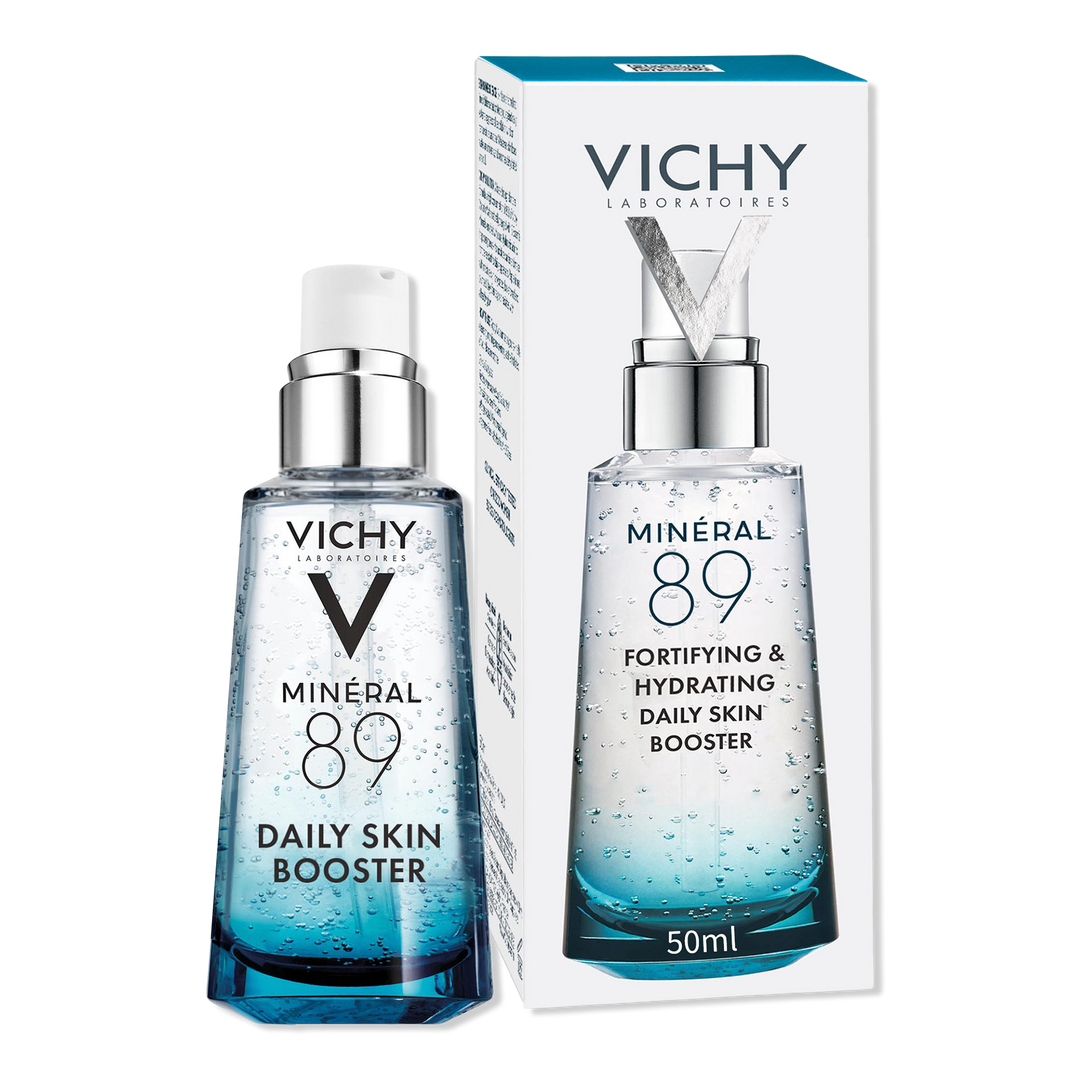
3 of 4: Best Hyaluronic Acid Serum for Sensitive Skin
Vichy Mineral 89 Hyaluronic Acid Face Serum
Fortifying & Hydrating Daily Booster | $29.99
Shop Vichy Mineral 89 at Ulta →
Vichy Mineral 89 combines 1.5% hyaluronic acid with 89% Vichy Mineralizing Water in a lightweight serum formulated for barrier support and surface hydration. The formula is free of fragrance and common sensitizing ingredients, making it a practical choice for skin that reacts to new products.
Key specs: 1.5% Hyaluronic Acid · 89% Vichy Mineralizing Water · Fragrance-Free
Usage Tip: If your skin is recovering from retinol irritation or over-exfoliation, consider using Mineral 89 as your sole serum step while the barrier stabilizes before reintroducing other actives.
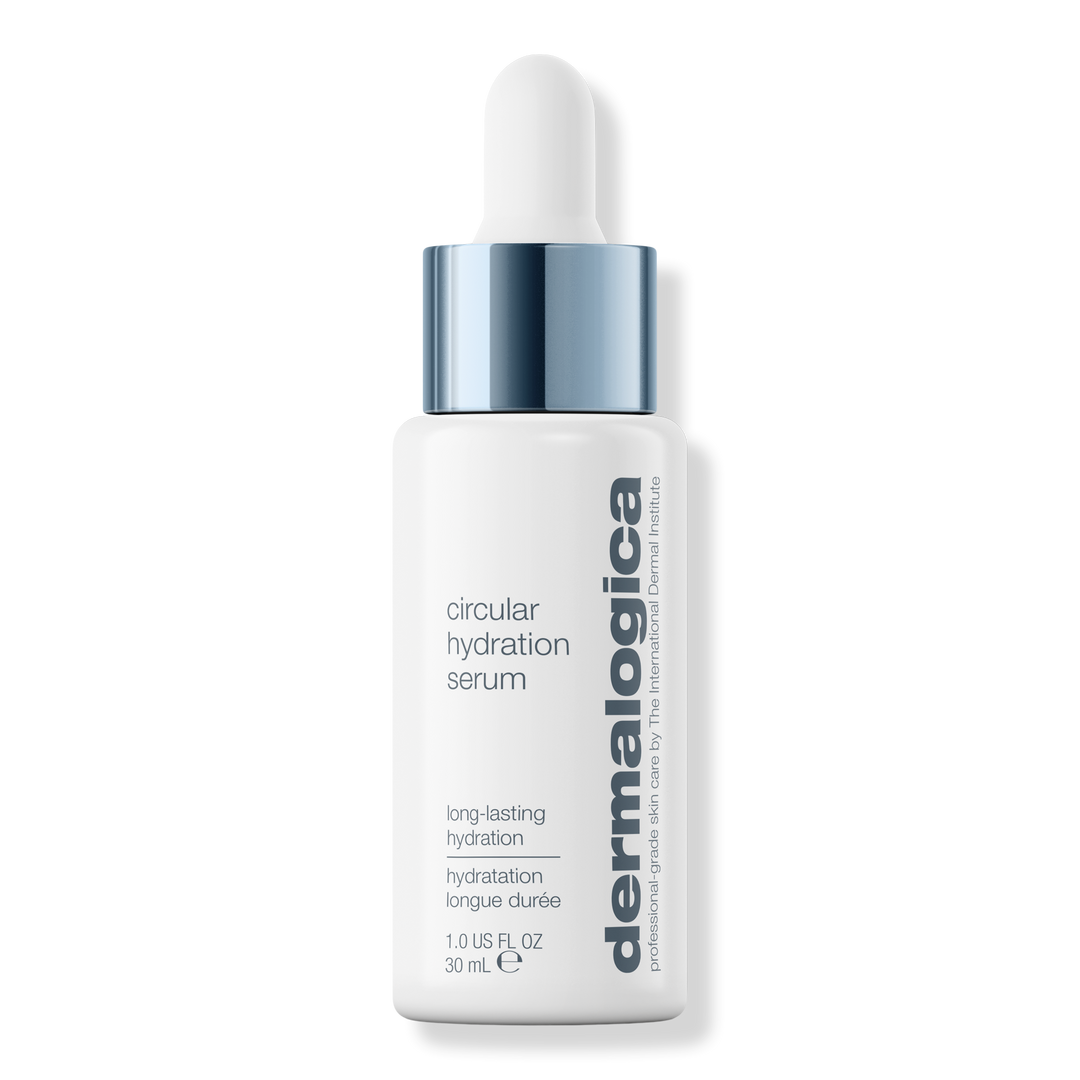
4 of 4: Best Luxury Hyaluronic Acid Serum
Dermalogica Circular Hydration Serum
Multi-Layer Hyaluronic Acid Serum | $69.00
Shop Dermalogica Circular Hydration Serum at Ulta →
Dermalogica's Circular Hydration Serum combines five types of hyaluronic acid at multiple molecular weights alongside sodium PCA, a naturally occurring humectant found in the skin's natural moisturizing factor (NMF). According to Dermalogica, the formula is designed to support the skin's own moisture-cycling process rather than delivering a single moisture hit.
For mature skin, chronically dehydrated skin, or anyone who has found standard single-weight HA serums insufficient, the multi-weight HA approach covers a broader range of skin depths than most formulas in this category.
Key specs: 5-Type Hyaluronic Acid Complex · Multiple Molecular Weights · Sodium PCA · Fragrance-Free
Frequently asked questions
What is hyaluronic acid and how does it work in skicare?
Hyaluronic acid is a naturally occurring humectant found in the body's connective tissues and skin. As a topical ingredient, it attracts water molecules to the surface of the skin. It draws moisture from the environment and holds it at the skin's surface, provided a moisturizer is applied on top to reduce evaporation.
What's the difference between low and high molecular weight hyaluronic acid?
Low molecular weight hyaluronic acid (20--300 kilodaltons) is understood to penetrate more deeply into the epidermis but carries a higher potential for irritation in sensitive skin. High molecular weight hyaluronic acid (1,000--1,400 kilodaltons) works at the skin's outermost layer, delivering immediate surface hydration and smoother texture with lower irritation risk. Many serums combine both in a multi-molecular formula to target multiple skin depths.
When in my skincare routine should I apply hyaluronic acid serum?
Apply hyaluronic acid serum immediately after cleansing, before any other serums, treatments or moisturizers. Hyaluronic acid is the first serum step because it needs to reach the skin's damp surface directly. Apply additional serums (vitamin C in the morning, retinol in the evening) on top of the HA layer, then follow with moisturizer and SPF in the morning.
How much hyaluronic acid serum should I use?
Two to three drops is the recommended amount for the full face and neck. Using more product doesn't deliver more hydration and can leave a tacky residue that may interfere with the absorption of moisturizer and other products applied on top.
Should I apply hyaluronic acid serum to damp or dry skin?
Apply hyaluronic acid serum to damp skin, not soaking wet and not completely dry. After cleansing, pat your face gently so a faint moisture residue remains, then apply the serum within 30--60 seconds. On completely dry skin, hyaluronic acid can draw moisture upward from deeper skin layers, where it may then evaporate, leaving skin drier than before application.
Can I layer hyaluronic acid with vitamin C, retinol or niacinamide?
Yes. Hyaluronic acid is pH-neutral and non-acidic, making it compatible with most common skincare actives. Apply hyaluronic acid first to damp skin, then layer vitamin C or niacinamide on top in the morning, or retinol in the evening. Applying HA before retinol may help buffer against the dryness some people experience with retinol use.
What skin types can use hyaluronic acid serum?
Hyaluronic acid is suitable for oily, dry, combination, sensitive and acne-prone skin. It is non-comedogenic and oil-free. Sensitive skin should look for high molecular weight formulas or dual-weight blends, which have a lower irritation profile than low molecular weight formulations.
What are the most common mistakes when using hyaluronic acid serum?
The two most common mistakes are applying HA to completely dry skin and skipping the moisturizer seal afterward. Applying to dry skin in a low-humidity environment can cause HA to draw moisture from deeper skin layers and release it to the air, leaving skin drier. Skipping the moisturizer means surface water can evaporate before it benefits the skin. Other common errors include using too much product, layering HA on top of heavier creams and waiting too long between the serum and moisturizer step.
The bottom line
Applying hyaluronic acid serum correctly comes down to three steps: damp skin, prompt application and a moisturizer seal on top. Getting those three right gives your serum the best chance of working as intended.
Ulta Beauty carries hyaluronic acid serums from affordable to luxury, so you can shop by skin type, formula preference or budget in one place.
Information provided is for educational purposes only and is not intended as medical advice or a guarantee of results. Consult a dermatologist or healthcare professional for personalized skin care guidance.
Related Content:
Best Pimple Patches, Summer Skin Care Sets, LED Face Masks Benefits, Beginners Skin Care Routine, Microcurrent Facial Benefits, Slugging in Skin Care, How to Use Retinol for Beginners?